
OBSERVATIONS ABOUT MOTIVATION
Life can be difficult. We are all faced with trials and challenges. It’s helpful to study other people’s life experiences in order to be encouraged to continue on with perseverance through all of what life throws at us. Here are a few thoughts about that subject, which 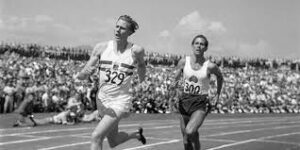 might be of help.
In 1954, Roger Bannister became famous for becoming the first person at a sanctioned track meet to run a mile in under four minutes. That was one of the most celebrated achievements in sports history. It occurred at Iffley Road Track at the University of Oxford. Bannister ran the mile in 3 minutes, 59.4 seconds. Until that time, more than 50 medical journals published articles saying that running a mile in less than four minutes was not humanly possible. Doctors warned athletes of the consequences to anyone who tried to do it. For decades, the “four-minute mile” was considered one of the greatest unsolved challenges in sports. Newspapers treated it almost like climbing Mount Everest.
What made the achievement even more impressive was that Bannister was not a full-time professional athlete. He was studying medicine while training, and he trained in relatively modest conditions compared with modern athletes. He balanced elite running with medical school, which added to his reputation for discipline and intelligence. Once Bannister broke the four-minute barrier, other runners did the same. Only a couple of months later, another runner, John Landy, ran an even faster mile at 3:58.0. More runners realized it was achievable. Over the following years, dozens of runners broke the four-minute mile, and then hundreds and eventually thousands worldwide. Experts say the four-minute mile was partly a mental barrier as well as a physical.
Bannister proved that when you believe and think you can, you activate motivation, commitment, confidence, and concentration. Motivators teach that airplanes and kites rise faster when they fly into the wind. Individuals grow stronger physically and mentally when they are tested with resistance or opposition. Limits are often psychological. Many barriers are mental, cultural, or conventional rather than real. What people say “can’t be done” is often only “hasn’t been done yet.” Preparation beats raw talent. Here, Bannister was not considered the most naturally gifted runner. He was a medical student with limited training time. What separated him was intelligent preparation, focused practice, and mental discipline. The lesson is that great achievement often comes from deliberate preparation rather than extraordinary natural gifts. It also shows belief changes, performance, and persistence after disappointment counts. Before breaking the record, Bannister suffered painful defeats, including at the 1952 Olympics. Instead of quitting, he learned from failure and refined his approach. One of the enduring meanings of Bannister’s achievement is this: The greatest barriers are often the ones accepted by everyone else, and once someone breaks through them, the world changes very quickly.
This truth was discussed by Roger Von Oech, an American author, speaker, and expert on innovative thinking. He once wrote that centuries ago, when mapmakers did not know what existed outside of the explored world, they would sketch a dragon at the edge of the map. This was a sign that a traveler would be entering unknown territory at their own risk. Von Oech argued that each one of us has a mental map of the world in our heads. Like maps of long ago, our mental maps have dragons on them. These represent things that we don’t want to do or push beyond our comfort zone. Sometimes the dragons are valid, but they prevent us from discovering something new. His point was essentially that whenever people move beyond familiar boundaries, uncertainty appears. Society often labels the unknown as dangerous, and innovation requires entering areas where there is no reliable map. He argued that in creativity, the “dragons” are the fear of failure, criticism, and trying ideas others think are foolish.
May we all learn the power of perseverance and determination in the face of challenges and obstacles. The experience of others and the wisdom of experts has demonstrated repeatedly that these are the characteristics that help us through the hard times.