
I.C.E. & THE PALMER RAIDS OF 1919
My view is that this nation has both the right and the responsibility to regulate immigration and to remove individuals who are legally subject to removal, particularly those who commit serious crimes. But that authority must be exercised through the rule of law—with 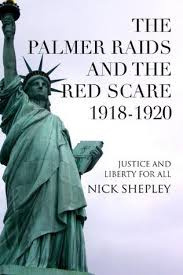 due process, fair hearings, and respect for individual rights. Effective immigration enforcement should focus its greatest resources on people who pose a genuine threat to public safety, rather than treating every undocumented immigrant as a criminal. What we have is that the U.S. Immigration and Customs Enforcement (ICE) is a federal agency within the Department of Homeland Security. Its principal activities include arresting, detaining, and removing people who are unlawfully present or otherwise removable under U.S. immigration law.
The real issue is not whether immigration laws should be enforced, but whether government enforcement remains accountable, subject to due process, and constrained by the Constitution. Instead, the documented abuses of ICE include family separation, detention conditions (overcrowding, inadequate medical care, deaths, and allegations of mistreatment), violations of due process, and unlawful aggressive enforcement. This includes workplace raids, arrests at or near courthouses and other sensitive locations, and enforcement actions involving people they believe pose little or no public-safety threat. Millions of dollars are involved with ICE. In 2025, Congress appropriated about $10 billion for ICE’s operations. In the “Reconciliation Law,” another $75 billion in additional funding was allocated. ICE has therefore been provided roughly $123.5 billion in these major appropriations since 2025 ($10 billion + $ 75 billion + $38.5 billion).
This is not the first time in history where government has created an agency with enormous power to arrest and imprison people in violation of Constitutional requirements. In 1934, Hermann Göring, as Adolf Hitler’s second-in-command, created the Gestapo (“Secret State Police”) as Nazi Germany’s political police. It was created to eliminate opposition to Adolf Hitler and the Nazi regime. Its activities included arresting political opponents, using surveillance and informants to identify suspected opponents, and suppressing resistance. It operated without normal judicial constraints; people could be detained under “protective custody” without ordinary criminal procedure. The Gestapo was an instrument of a totalitarian regime, and ICE is legally required to operate within a constitutional democracy. However, the issue is whether those restraints are being ignored by our government. ICE practices have demonstrated excessive government abuse of power and a lack of due process and accountability.
ICE is not the first time this country has conducted Gestapo-like conduct for political reasons. In 1919, President Woodrow Wilson appointed A. Mitchell Palmer as U.S. Attorney General during a time of national fear about a Communist takeover of government. Following the Russian Revolution of 1917, America was alarmed about a possible communist revolution. The focus was on immigrants, labor activists, as well as minority ethnic groups. The 1917 Espionage Act was a direct result of the paranoia in that regard. It was followed by the sedition act of 1918. These laws targeted people who criticized the government and were largely directed at immigrants and particularly labor union leaders. For example, anyone who was a member of the Industrial Workers of the World, the “wobblies,” was specifically at risk under these laws. This fear was greatly enhanced when, in the spring of 1919, bombs were set off around the country aimed at political leaders. Thirty-six package bombs were  mailed targeting such people as Oliver Wendell Holmes, John D. Rockefeller, J.P. Morgan, and other prominent citizens, but were intercepted. A fear of a conspiracy was set off across the country.
Attorney General Palmer appointed 24-year-old J. Edgar Hoover, a Justice Department lawyer in charge of the Bureau of Investigation, to focus on the concern. Under Hoover, raids were conducted on places where immigrants had gathered. The Department of Justice stormed the meeting room at the Russian people’s house in New York, where 200 people were beaten with clubs and arrested. Raids continued across the country, which became known as the “Palmer Raids.” One thousand people were arrested in eleven cities. In Connecticut, one hundred men were held for five months, during which they weren’t allowed lawyers nor even informed of the charges. Many of the alleged communist sympathizers that were rounded up were deported in December 1919. Palmer arranged a ship for this purpose, which became known as the ” Soviet Ark” two hundred and forty-nine people were deported after illegal hearings.
A second wave of Palmer raids occurred in January 1920. Justice Department agents conducted raids in 33 cities, arresting 3000 people. The prosecutor alleged a communist plot to shut off the city’s electricity and steal its food supply. Detroit, nearly 1000 men were detained and starved for a week on the top floor of a federal building. The American Civil Liberties Union was created in 1920 as a direct result of the Palmer Raids. At first, the raids were popular with American citizens, but after the second wave of raids, Palmer began to face severe criticism. Reports revealing the extent to which due process had been disregarded caused even further problems for Palmer. The assistant secretary of labor invalidated 1500 deportations as improper. Palmer responded with a prediction of an armed communist uprising.
In June 1919, a bomb exploded in front of Atty. Gen. Palmer’s home in Washington DC. The bomb exploded prematurely and killed the person setting it, militant anarchist Carlo Valdinoci. After a time, public opinion turned against the raids. Reports of warrantless arrests, poor treatment of detainees, and violations of civil liberties generated public opposition. Federal judges criticized the government’s failure to respect due process and limits on searches and arrests and ruled against them. Congress and the public became upset with the government’s tactics. Palmer had predicted a massive communist uprising on May 1, 1920, but it never occurred. The failure of that prediction damaged his credibility. By 1920, the raids had largely ended, and Palmer’s Justice Department moved away from the mass-arrest approach.
.